(This post first appeared in the Only Influencers website here)
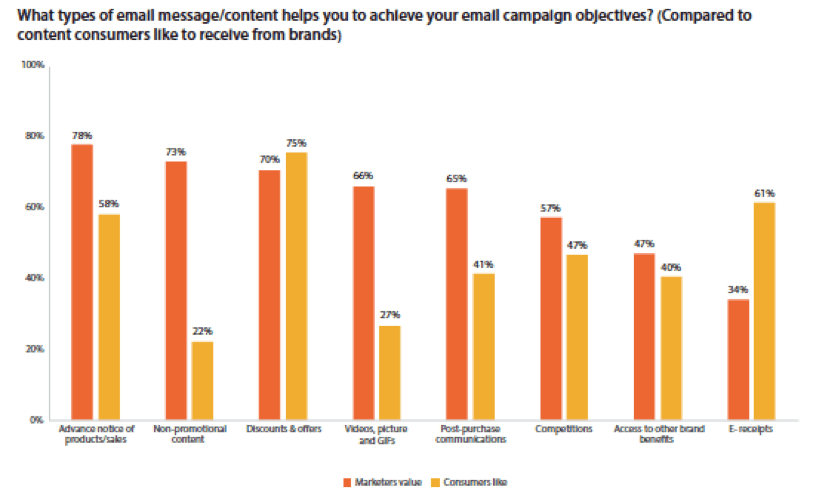
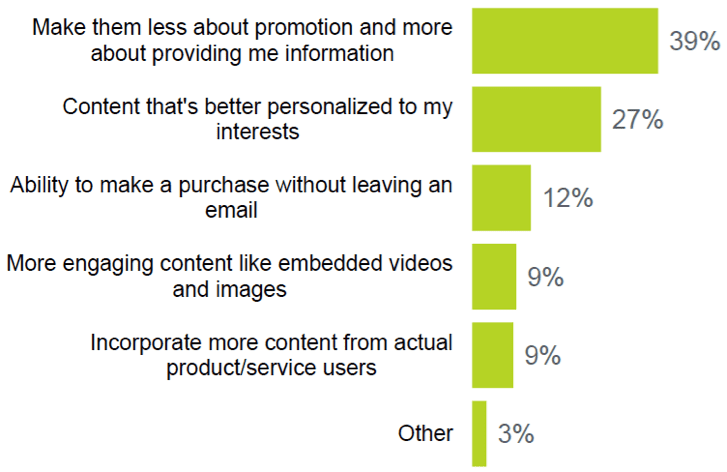
The recent DMA 2019 Marketer Tracker Report reported that only 14% of consumers think that over half of the emails an organisation sends are relevant to them as individuals.But maybe more shockingly, only 55% of marketers think that more than half of all the emails they send are relevant.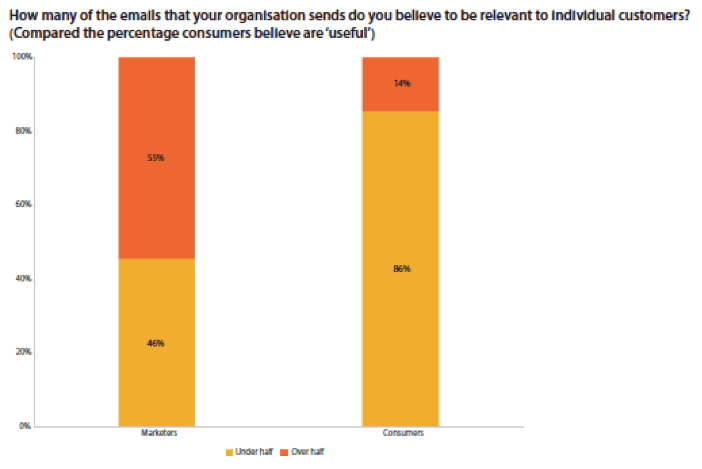 So why aren’t we sending more relevant emails to better engage our prospects and customers, and more successfully lead them through to the next stage in their journey with our brand and ultimately to enable more conversions?One of the possible reasons for this is also illustrated in the report; there is a clear difference between what we as marketers THINK consumers want, vs. what they ACTUALLY want…
 Truly, understanding what your email marketing subscribers want from you that will help, excite and engage them, starts with having the right data (in the right place in your business so that it can be used in the most productive way).There are various types of data that we can collect:
 With the increased power placed in consumers laps with the introduction of GDPR in Europe (for example), a better understanding of the data they give out and how it is used by brands, and wanting information that speaks directly to them and their needs (and the needs they don’t even know they have yet!), consumers EXPECT that if they’ve given us permission to use they’re data that we’ll not only store it safely, but that we will actually use it to give them a better experience.And yet so many brands are storing many different types of data but still not using it effectively to get personal and engage 1-2-1 with their subscribers and do exactly that.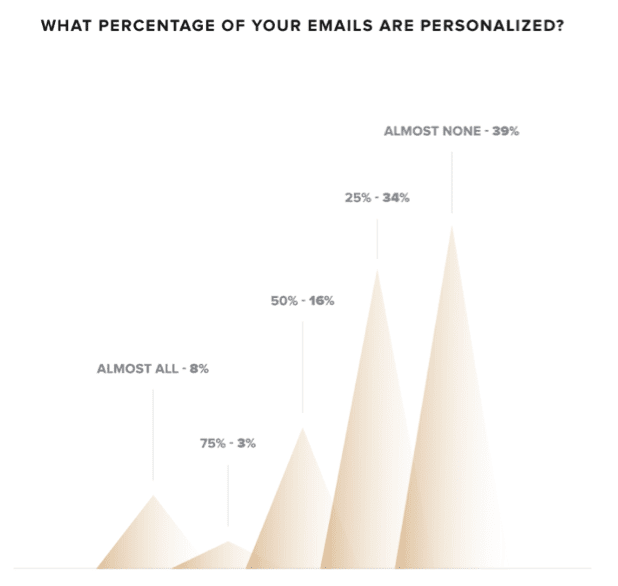
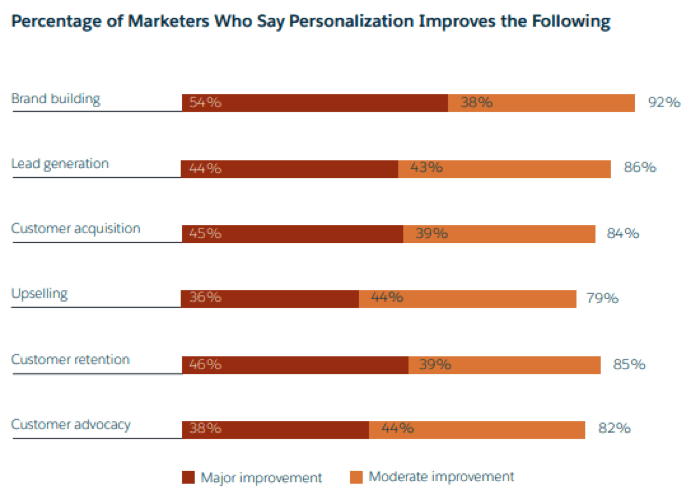
 96% of organisations believe that personalisation can improve email marketing performance and conversions (Adestra).39% of email marketers that practice list segmentation see better open rates, 28% see lower opt-out and unsubscribe rates, and 24% see better email deliverability, increased sales leads, and greater revenue (eMarketer).If we know that increased relevancy in our email marketing improves engagement rates, and therefore deliverability and Inbox Placement Rates (IPR) allowing us to surface our messages to more of our subscribers, and subsequently generate more revenue (most business’ main objective) – once again we can ask ourselves ‘why aren’t we doing more to better use our effectively data and increase the relevancy of our campaigns to drive the increased results we know are possible’?Here are a few of my thoughts…1. We put the needs of the business before the subscriberThe Email Addiction Research report (Zettasphere & Emailmonday) showed that 37% of our unengaged audience is waiting for the right offer (37%) to prompt them to buy again.In a lot of cases we’re not making the effort to meet their needs or listening to what they actually want, allowing us to actually deliver the RIGHT offer based on the data we hold about them. Instead we’re serving up any offer that the business deems important, or all our offers and hoping that something sticks.We’re stuck in a rinse and repeat cycle of similar messaging.Company pressures to sell more, email more, do more, with our limited department time and resources are rife.In many cases brands are continuing to use email not just as a push channel but as a ‘ram it down your throat’ channel until the subscriber screams ‘enough’!By listening, understanding and communicating the best information to match needs, our programmes will be infinitely more successful.Of course there are times that as consumers we don’t even know that we need or want something until it is suggested to us (the whole reason advertising began!) and so there is always a place for a surprise suggestive communication. But on the whole, we need to be more strategic as to how we serve the messages that we want to communicate as a business in a way that connects with our subscribers to maximise results and help us meet our overall business goals in a way that doesn’t burn our bridges in the process.“We must consider how we are to meet the needs of the consumer primarily, in order to better meet the needs of our business as a result.”2. The intention is there, but marketers lack the time and resources to get out of our day-to-day tasks and actually strategise OR don’t have the knowledge to do so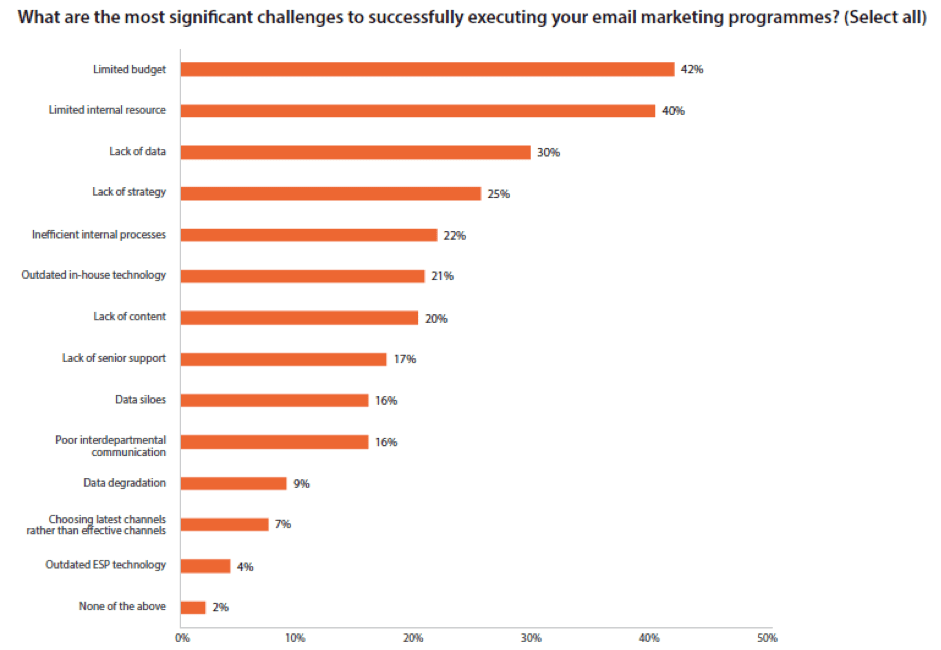
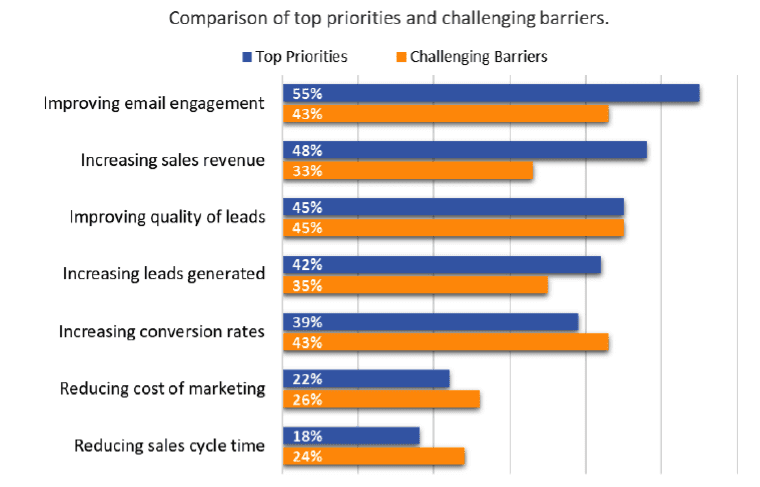 The majority of marketers don’t have the time, or the resources they need to implement what could be seen as basic campaigns, let alone the newest email marketing trend. Or, the way the infrastructure in the company is current set up is prohibitive to being able to get new ideas up and running; legal restraints, data silos and departmental collaboration challenges amongst other things.In my book, ‘E-telligence: Email marketing isn’t dead the way you’re using it is’ I emphasise how important it is to first understand exactly what you have in place in your organisation already and WHY when it comes to your email marketing strategy (an area that most tend to skip over, but that is critical especially with staff turnover and a lack of passed on knowledge in some cases because of this).By having a clear view of our strategy, we can quickly identify those areas of weakness and opportunity that will best serve the customer, are the easiest to implement and will see the best return for our efforts; optimising your current campaigns before then going on to add new, well thought through, customer-centric campaigns, is critical to maximising your resources.To make the time or seek additional resources to help overcome these challenges to allow us to move beyond our day-to-day tasks and push our email marketing programmes forward is now a necessity.
 Marketers have more data than ever before at their figure tips but only 47% of marketers say they have a completely unified view of customer data.Until we have access in a meaningful format to the data we collect, collect the right data or have the capacity to disseminate it into a format that we can actually use to identify different types of customers, where they are on their journey and what they need, we will struggle to further increase relevancy past a basic level.So how can we move forward and actually implement personalised content into our email marketing strategy?In addition to my thoughts above, there are 3 other key areas to focus on in my opinion:1. Truly understanding our audience, and use new technology to help us do this better, and faster than ever beforeStarting with a data audit and understanding your data is step 1; what you have, where it is in the business, where the gaps are (how you access data to use in your email marketing and how you add to your current data set to enhance your customer picture) and how all this fits together to create a combined picture of each subscriber.And, as the amount of data we hold on our customers grows ever larger, the challenge to create this comprehensive, single customer view will become even greater than it is now.Utilising new technology such as Artificial Intelligence (AI) will make it easier to spot trends and understand correlations and help brands get ahead of their current activity and serve content which meets a need subscribers didn’t even know they had yet!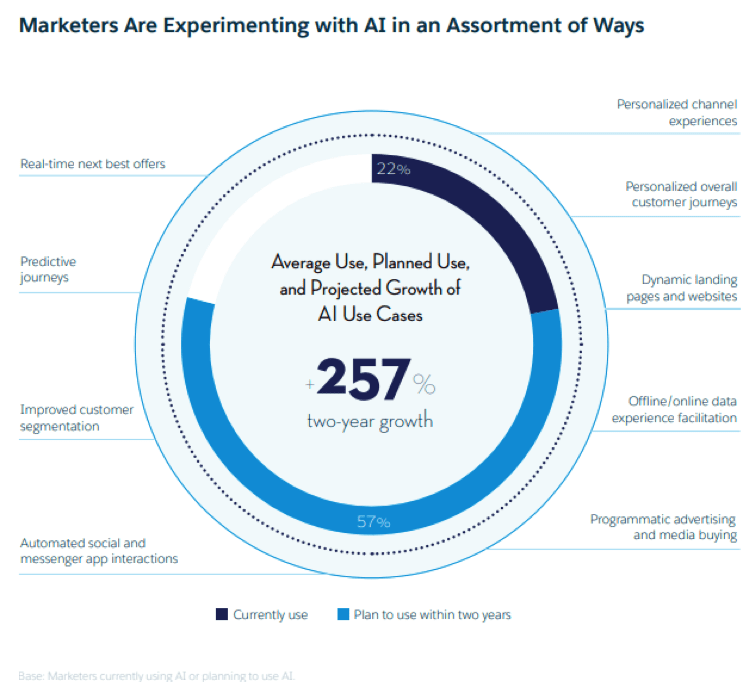
 The more we can use technology to help us to more easily and quickly provide relevant communications the closer we will be to our 1-2-1 nirvana.3. Let’s get interactive!It’s may be a top design trend, but for me what it boils down to is a need to think about how to make interactions easier, quicker and more direct for the customer when we do send the right information to them.Whether that’s serving product information in a more accessible way within your creative, allowing subscribers to efficiently register their feedback without jumping through multiple steps, serving the results of an action (such as interacting with a research poll) or being able to make a purchase right there in the emailAs technology adapts, we need to utilise it to once again better meet our subscribers needs efficiently.“We need to embrace these new trends and technologies strategically to help us to put the subscribers needs first.By doing so, we’ll see the achievement of our ultimate business goals sky rocket”What are the common barriers to successfully implementing personalised, relevant campaigns into yours/your client’s strategies?How can we overcome these to improve our reputation and increase relevancy?
 Related articles


A CRM strategy is only as good as your ability to deliver it
The free CRM Priority Check scores your capability across six areas in about five minutes and shows you where a plan is most likely to stall before it gets there.
